Commission, gift or flat fee: what every creator on your BFCM roster has to disclose under TikTok's 30 Oct 2026 policy and FTC rules, plus a copy-paste brief.
Your Creators Know What #ad Means. That Was Never the Problem.
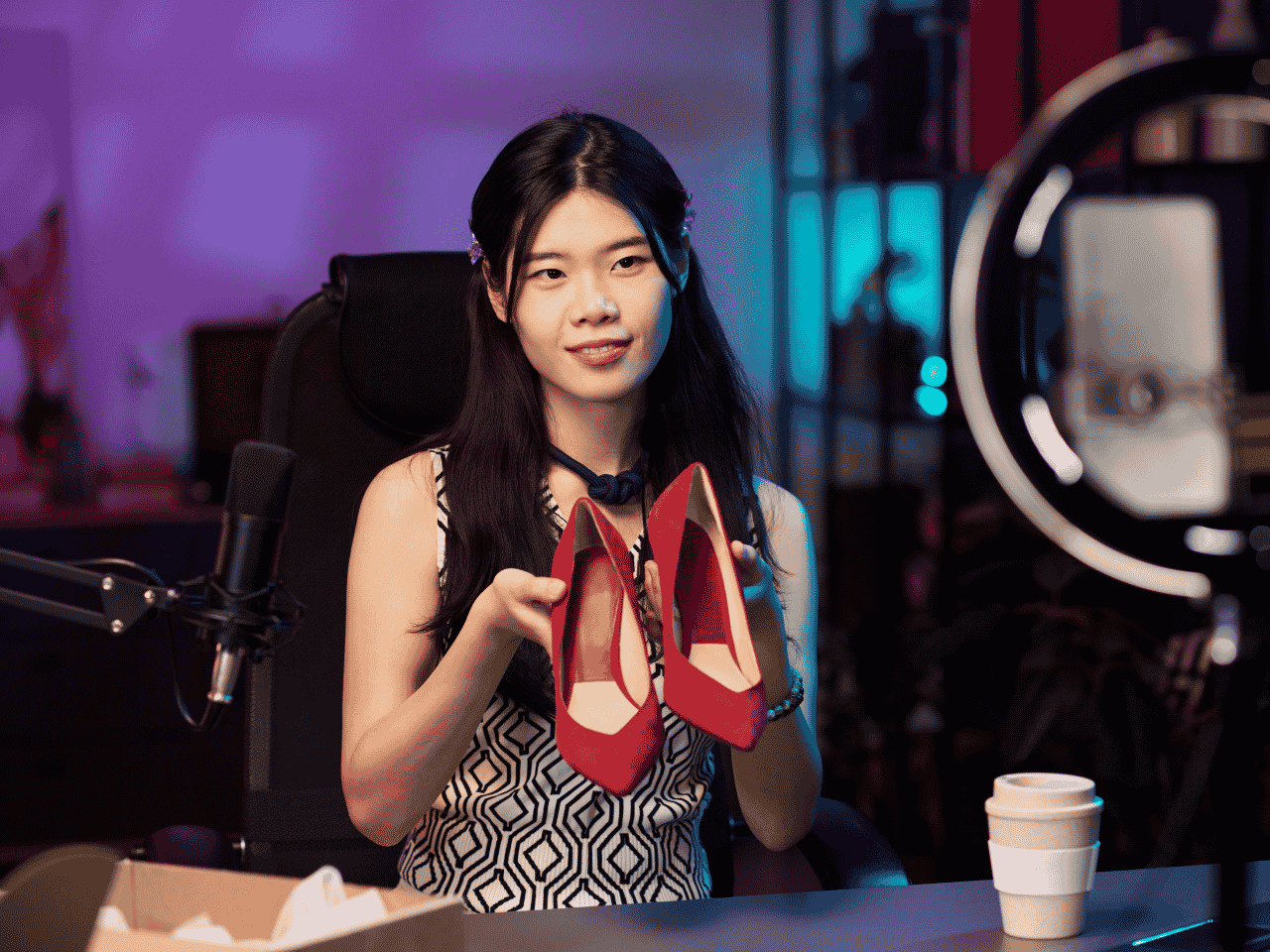
Picture your BFCM roster for a second. Twelve creators. Four of them are TikTok Shop affiliates on commission only. Three got free product in October. Two are on a flat fee plus commission. One is your brand ambassador. The rest came through an agency, and nobody's quite sure what the agency promised them.
Every single one of them has heard of #ad.
And if you still ask "who's disclosing what, and where?" I'd bet nobody on your team could answer in under five minutes. That's the real problem with Black Friday collabs. You might face a coordination gap and this is multiplied by however many creators you've got all, all of them posting in the same 20-day window on your product.
The numbers back this up. When the European Commission and national consumer authorities checked the posts of 576 influencers, 97% published commercial content but only 20% consistently disclosed it as advertising. And 38% skipped the platform's own disclosure labels in favour of vaguer words like "collaboration."
Lol, collaboration 😅
So if your plan is "the creators will handle it".. statistically, most of them won't.
Not sure your creative passes? Run it through our free TikTok Ad Compliance Checker before you upload.
Has anyone actually been called out for this on TikTok? 🧐

Yes, and these are real, named cases (not TikTok's own enforcement, which stays private inside accounts, but regulators and self-regulators looking at TikTok posts).
The FTC's aspartame letters. In November 2023, the FTC sent warning letters to two trade groups, including the American Beverage Association, and to 12 dietitians and health influencers over Instagram and TikTok posts. The posts either didn't disclose the paid relationship or disclosed it badly.
The detail in those letters is what matters for your brief. According to legal analysis of the letters, the FTC flagged that none of the TikTok or Instagram videos it reviewed included a disclosure in the video itself, and that the platform's "Paid partnership" tool could be too easy to miss and didn't name the sponsor. Even "Paid partnership with ameribev" was called out, because viewers might not know what "ameribev" is. The letters also flagged civil penalties of up to $50,120 per violation at the time. (The current maximum is $53,088 per violation, and the FTC has confirmed those levels stay unchanged for 2026.)
📊 Maximum civil penalty is $53,088 per violation - FTC · FTC keeps 2025 penalty levels unchanged for 2026 - Federal Register, 15 September 2026
P&G vs Blueland on TikTok Shop. In late 2025, the National Advertising Division (the US advertising industry's self-regulator) looked at Blueland's TikTok Shop influencer posts after a challenge from Procter & Gamble. Some influencers buried #BlueLandPartner in captions or left disclosure out of the video, and Blueland agreed to make disclosures clearer and more prominent. Interestingly, NAD also found that TikTok's "creator earns commission" label can be enough for pure affiliate posts.
TikTok's 2026 Policy Update

Here is the gist of TikTok’s Branded Content Policy which went live on 30 October 2026 effective date.
► "Reviews" are now in the definition. Branded content is content that promotes or reviews a third-party brand in exchange for payment or any other incentive. That closes the "I'm just giving my honest opinion on a gifted product" loophole.
► Commission counts. The policy has long listed products a creator earns commission on, via an affiliate link or promo code, as branded content. Every TikTok Shop affiliate video sits inside that definition.
► Restricted industries are now gated. Branded content in restricted industries is allowed but only shown in the market it was posted in, may be age restricted, and needs brand partners to get explicit permission from TikTok. The brand also needs a verified Business Account, and partnerships can only run through TikTok One. "Restricted" doesn't mean "allowed everywhere," either: TikTok lists, category by category, which markets allow it (usually 18+) and which don't. An example here, Vitamin supplements, for example, are listed as allowed for 18+ audiences in the US, UK, France, Germany, Italy and Spain, but not allowed in Belgium, the Netherlands or Luxembourg, and alcohol branded content isn't allowed in France, Belgium, the Netherlands or Luxembourg at all (this is at time of print and might change if you read this at a later date, say 2027, so always check verified sources).
According to a breakdown of the new policy, that restricted tier includes categories like vitamin supplements, over-the-counter medicines, alcohol, energy drinks, financial services and underwear, and brands in it can only work with creators through TikTok One. The same update added rules against content that promotes negative body image or an unhealthy relationship with food or exercise.
(If you sell supplements or beauty, that's the paragraph to forward to your team right now.)
And one myth worth killing while we're here going through the update. Lots of creators avoid the toggle because they think it tanks their reach. TikTok says it ran an internal study of nearly 2 million videos with and without proper disclosure and found no performance difference. What does hurt reach is getting caught without it: TikTok can flag undisclosed commercial content, and the creator gets 24 hours to fix it or appeal before the video becomes ineligible for the For You feed.

TikTok decides what looks commercial using three signals: financial incentives (links, promo codes, QR codes), brand mentions (#brand, @brand, a visible logo) and product recommendations (demos, "buy now"). A BFCM haul video usually hits all three in the first ten seconds.
The Disclosure Rules for Your BFCM Roster

Here's what every creator on your roster needs to do, so read these carefully:
🔺 Toggle on, every post, every LIVE. The commercial content disclosure setting is required for branded content, and it's what adds the label viewers see.
🔺 Name the product on screen or out loud. TikTok's policy says the product has to be clear without viewers going to the profile or a link. "Link in bio for my fave BF deal" doesn't cut it.
🔺 Disclose in the video, not just the label. For US audiences, the FTC's position is that if the endorsement is spoken and shown, the disclosure should be too. A quick "this is paid, I'm partnered with [brand]" at the start covers it.
🔺 Use the brand's real name. Abbreviations, inside jokes and hashtag soup (#collab #bfdeals #pp) aren't disclosures.
🔺 The commission label isn't a free pass for extra pay. NAD accepted TikTok's commission label for pure affiliate posts. A creator who also got a flat fee or bonus has a bigger relationship than "earns commission," so they need a fuller disclosure.
🔺 Gifted means disclosed. Even if you said "no obligation to post," a review of a free product is branded content under the new definition.
🔺 Restricted categories go through TikTok One. If your BFCM hero is a vitamin gummy or a credit product, an open affiliate free-for-all is not your plan.
Already know the basics of the label itself and how it works on Spark Ads? My TikTok branded content policy breakdown covers the label mechanics. This post is about running it across a whole roster.
Who Owes What: The Roster Table

Sort every creator on your BFCM list into one of these rows, then brief them accordingly.
| Creator relationship | TikTok's policy | What I'd brief them to show |
|---|---|---|
| TikTok Shop affiliate, commission only | Branded content (commission) | Toggle on + "I earn commission if you buy from my cart" said in the video |
| Free product, then posts a review | Branded content (gifted / "reviews") | Toggle on + "[Brand] sent me this for free" in the first few seconds |
| Flat fee + commission | Branded content (paid + commission) | Toggle on + "Paid partnership with [Brand]" spoken and on screen |
| Brand ambassador or long-term partner | Branded content (commercial relationship) | Toggle on + "I'm a paid ambassador for [Brand]" on every BFCM post |
| Restricted category (e.g. vitamins, alcohol) | Restricted: TikTok permission + TikTok One | Don't post until the partnership is approved through TikTok One |
| Your own staff posting about your sale | Promotional content (own brand) | Toggle on as your own brand + "I work at [Brand]" |
The right-hand column is my recommendation, built to satisfy both TikTok's policy and the FTC's in-video expectations. It's stricter than the bare minimum on purpose. In BFCM week, nobody has time to argue about the bare minimum.
Four BFCM Collab Scenarios
The brands below are made up and the scenarios are hypothetical, but every verdict is tied to TikTok's policy wording or a real regulator decision.
Scenario 1: Pebble & Plume, a stationery brand, sends Black Friday gift boxes to 20 creators with a note saying "no obligation, just tell people what you honestly think." Eight post reviews without the toggle. Rejected 🙅. A review of a gifted product is branded content under TikTok's current definition, obligation or not.
Scenario 2: A creator on a flat fee plus commission for the same brand captions her video "#collab #bfdeals @pnp 🖤" with no toggle and nothing said in the video. Rejected 🙅. No toggle, the brand isn't clearly named, and nothing is in the video itself. That's the FTC's aspartame letters all over again.
Scenario 3: A TikTok Shop affiliate on commission only posts a haul with the toggle on, the commission label showing, and says at the start, "I earn commission if you buy anything from my cart." ✅ Allowed. Toggle, label and a plain spoken disclosure. Nothing for anyone to argue about.
Scenario 4: A supplement brand opens its vitamin gummies to every affiliate in the marketplace for BFCM, without any TikTok One approval. Rejected 🙅. Under the updated policy, vitamin-type products sit in the restricted tier, so brand partnerships need TikTok's permission and have to run through TikTok One. And if a creator also says the gummies "fix your immune system," you've got a medical claim problem on top.
The Creator Brief Block (Paste This Into Every BFCM Brief)

Swap in your brand name and send it to every creator and agency on the roster:
Disclosure for this campaign (non-negotiable):
1. Turn on "Disclose commercial content" for every video and LIVE about [Brand].
2. Say it in the first few seconds: "This is a paid partnership with [Brand]" or "[Brand] sent me this" or "I earn commission from my cart."
3. Show the product and say its name. Don't rely on your bio or links.
4. Write [Brand] in full. No abbreviations, no hashtag-only disclosures.
5. Only use the price, discount and end date in our campaign sheet. Don't add your own.
6. No health, cure or "results in X days" claims. If you're unsure, ask us before posting.
(Point 5 matters more than it looks. A creator who says "ends tonight!" when your sale doesn't is creating a misleading urgency claim with your name on it.)
The BFCM Collab Disclosure Checklist ✅
Run this before the first creator video goes up:
◻ Is every creator sorted into a row of the roster table, including anyone who came through an agency?
◻ Has every creator received the brief block in writing, and replied to confirm?
◻ Do you know which creators got extra pay on top of commission?
◻ Is any BFCM product in a restricted category, and if so, is it approved through TikTok One and allowed in every market you're posting to?
◻ Have you checked the first video from each creator for the toggle, a spoken disclosure and the brand's full name?
◻ Does anyone own the job of spot-checking creator posts daily during the campaign?
◻ If you're running creator videos as Spark Ads, do you have the authorisation and does the disclosure carry over?
◻ For EU or UK audiences, have you checked local rules on top of TikTok's (they're often stricter than you'd expect)?
Frequently Asked Questions
Do TikTok Shop affiliates need to disclose commissions?
Yes. TikTok's Branded Content Policy counts content where a creator earns commission, through an affiliate link or promo code, as branded content, which means using the commercial content disclosure setting. Saying "I earn commission" in the video is the safest way to cover US FTC expectations too.
Is TikTok's "Paid partnership" label enough on its own?
Not always. The FTC has warned that platform disclosure tools can be too easy to miss and may not name the sponsor. For US audiences, back the label up with a spoken and on-screen disclosure in the video.
Do creators need to disclose free products from a brand?
Yes. TikTok's current Branded Content Policy (effective 30 October 2026) covers content that promotes or reviews a brand in exchange for payment or any other incentive, and gifted products count.
Does disclosing a paid partnership hurt reach on TikTok?
TikTok says no. Its internal study of nearly 2 million videos found no performance difference with proper disclosure. Undisclosed commercial content, on the other hand, can lose For You feed eligibility if it isn't fixed within 24 hours of a notification.
Who is responsible when a creator doesn't disclose?
TikTok's policy puts the disclosure duty on the person posting. But regulators like the FTC have also sent warnings to the brands and trade groups behind undisclosed posts, not just the creators, so brands should brief, monitor and keep records.
Before your creator content goes live, make sure your own account is in good shape with the pre-BFCM account health check, and if creators are hosting LIVEs for you, share what they can and can't say during a TikTok Shop LIVE. Managing a big roster this season? Book a team training workshop for your creators and affiliates, and scale your sale, not your risk (you can always reach out to us!).
Last reviewed: 10 November 2026. TikTok policy rules link to TikTok's own pages. Regulator and self-regulatory cases link to the FTC and named legal or trade publications.
This article reflects TikTok's official policy guidelines as published at the time of writing. TikTok updates its policies regularly, so always refer to the TikTok Advertising Policies page for the latest information. First Review accepts no liability for changes made after publication.


