
Guaranteed returns, recruitment pitches and payday loans: three fast ways to get your financial ad banned for good.
Why financial services is TikTok's messiest ad category
If you work in fintech, banking, investing, or crypto and you want to run TikTok ads, you're operating in the single most layered, possibly complex (to some of us corner) of the platform's entire policy book.
Here's why: financial advertising is almost entirely market-specific, and that catches a lot of smart teams off guard.
The rules for a mortgage ad in the US are not the same rules for the UK, Singapore, or Australia. TikTok's policy sits on top of local financial regulation and you have to satisfy both at once. Get one wrong and your ad gets rejected. Get both wrong and you're looking at a restricted account 🤷🏻♀️
What that means in practice: the crypto ad that sailed through review in the US can fail instantly the moment you expand targeting to a new country, even with an identical creative.
Now digest that. Ok let’s continue!
TikTok has also kept moving on crypto specifically. Categories that were flatly banned two years ago are now conditionally allowed in dozens of markets under a formal approval process but most guides just haven't caught up. What this simply means - if you were trying to run Crypto in country XXX 2-3 years ago and gave up as the market was not open to run ads, then now is the time worth checking if it is.
One more thing before we get into it: this is not a hypothetical compliance exercise or something to scare fintech marketers.

Regulators are now actively forcing platforms to police financial ads, not just asking nicely. In August 2026, Singapore's police force ordered Meta, Instagram, and TikTok to start verifying advertiser licensing and blocking unlicensed financial ads by January 31, 2027, with fines running up to S$10 million per violation once the updated framework lands (Singapore Police Force, official Code of Practice announcement). This is exactly why the paperwork matters more this year than it did last year.
And the money involved isn't small. The FTC's most recent data shows people reported losing $2.1 billion to scams that started on social media in 2025, an eightfold jump since 2020, and more than half of that ($1.1 billion) came from investment scams specifically (FTC, April 2026). That is the backdrop every financial ad review policy on every platform (Facebook, TikTok, Snapchat etc) is being written against right now.
TikTok's three-zone framework for financial services

Before the sub-categories, here's the mental model that makes this policy navigable. It's the one I walk through with actual human moderators when I was a Policy Trainer at TikTok and when friends come seeking for advice on how to navigate through this industry.
Allowed - permitted with standard disclosures: mainstream consumer products that run with proper documentation and required disclosure language. Bank accounts, credit cards, personal loans, insurance, regulated investment platforms.
Restricted - special approval required: legal products that need extra documentation, licensing verification, and market-by-market approval before a campaign can go live. They include licensed crypto exchanges in approved markets and certain investment products.
Prohibited: products TikTok will not allow under any circumstances, regardless of your licensing or legal status. CFDs, binary options, penny stocks, unregulated crypto services, pyramid schemes, and a few more that don't get talked about enough. My rule of thumb is this - if you are promoting a financial product or service to a family member and they still find it hard to grasp it or explain it back to you what the product or service does - it will mostly not be a permitted product on the platform (as it is too complex and does not protect the consumer).
Prohibited Zone: what's banned everywhere, no exceptions 👎
The usual suspects

That leveraged CFD ad promising "10x your position overnight"? Rejected and prohibited across almost every single market TikTok operates in:
- Contracts for Difference (CFDs), leveraged derivatives that let people speculate on price movement without owning the asset
- Financial spread betting, placing bets on asset price movement
- Penny stocks, extremely low-priced, high-volatility stocks associated with pump-and-dump schemes
- Binary options, all-or-nothing bets on whether a price moves up or down
- Mini-bonds, particularly those marketed to retail investors without full regulatory protection
These are banned because they carry very high rates of retail investor loss and a long track record of consumer harm.
The four categories most compliance checklists forget
TikTok's current policy explicitly bans four more categories that rarely make anyone's list:
- Peer-to-peer (P2P) lending services
- Penny auctions
- Credit repair services
- Bail bonds
If your product touches any of these, don't even bother building the campaign. There's no approval path and it will get rejected from the get-go.
Pyramid schemes and get-rich-quick offers

Also prohibited and it covers:
- Guaranteed passive income claims
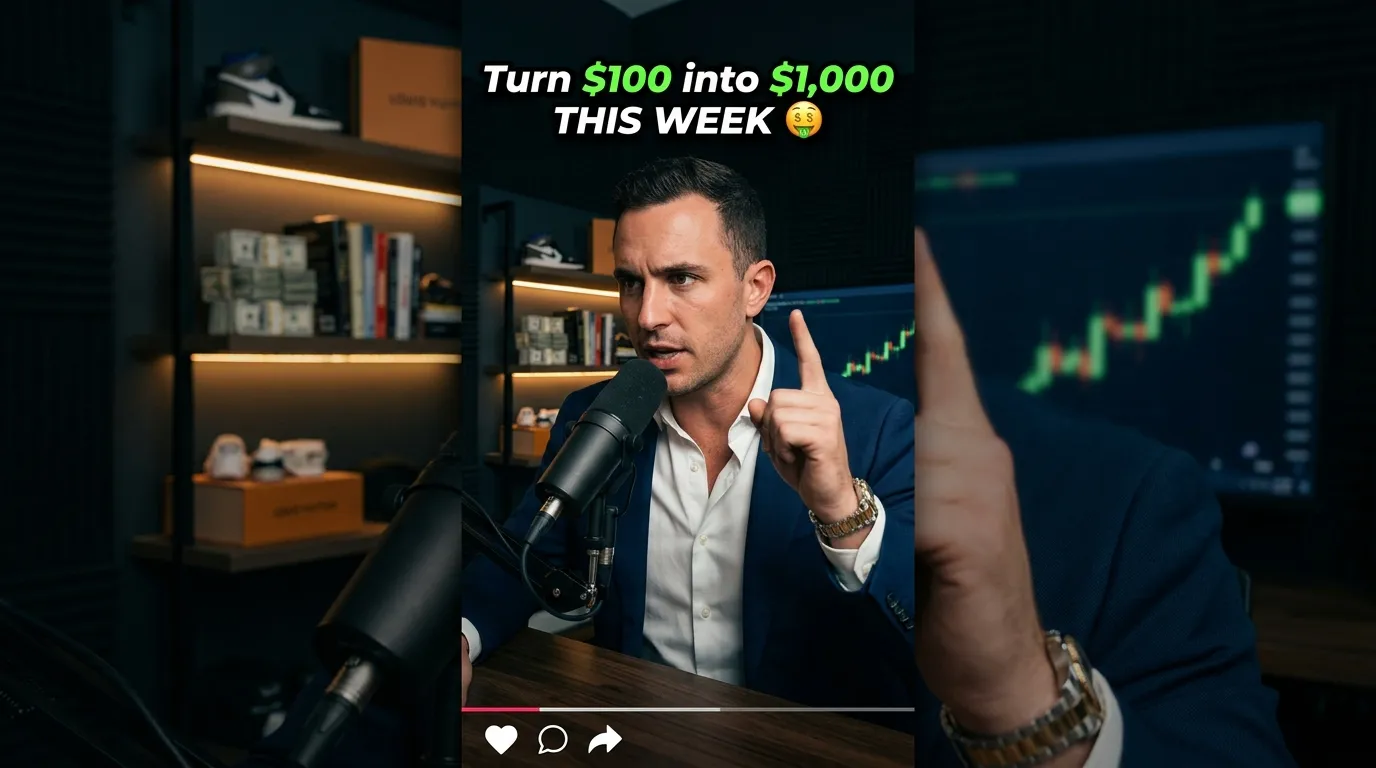
- Any offer that promises a specific return as a certainty ("turn $100 into $1,000 this week")
- Pyramid structures where income comes from recruitment, not product sales
- MLM advertising that pitches the "opportunity" (downline recruitment) instead of the product itself
Payday loans
Prohibited or heavily restricted depending on the market. High-interest, short-term lending faces escalating restrictions across most of TikTok's products. Check your specific market before you launch campaigns pertaining to payday loans.
Allowed and Restricted: what's permitted, and what it costs you

Banking and credit products (Allowed)
Bank accounts, credit cards, debit cards, savings accounts, and payment platforms are permitted, no special approval needed, just the standard compliance framework plus finance-specific disclosures.
What has to be disclosed, and where:
Language that gets banking/credit ads rejected:
💰 "No interest ever," unless that's 100% factually and permanently true
💰 "Guaranteed approval," since approval can't be universally guaranteed
💰 Any competitor comparison you can't back up with documented evidence
Loan and lending products (Allowed, but with some caveats)
Personal loans, mortgages, auto financing, and business lending can run with licensing documentation on file but here’s some additional notes to be mindful of:
Required:
- Clear APR disclosure with a representative example, not buried in fine print, findable and readable
- 18+ age targeting on every loan ad
- No "same-day cash" or "instant approval" language!
What gets it rejected:
- "Best rates guaranteed" without evidence
- "No credit check required" if that isn't universally true. I highly recommend never using this line because you might be triggering a different violation
- Predatory framing aimed at financially distressed audiences ("drowning in debt?" “need urgent cash and instant approval now?”)
If you want the full breakdown of exactly which claims and phrases trigger rejection (not just for loans, across the whole financial category), we've covered TikTok's financial misrepresentation policy separately and it pairs well with this guide. Maybe some light reading before bed? 😅

Insurance products (Allowed)
Health, life, auto, and general insurance are permitted with market licensing.
Required:
- Proof of relevant market licensing (submitted through Ads Manager)
- Age restrictions applied
Retail investment platforms and securities (Restricted)
Regulated brokerages, robo-advisors, ETF services, and retail investment apps sit in the restricted zone and is permitted with the right paperwork.
Required before your first ad runs:
- Regulatory licensing in every market the ad will serve
- A risk warning in the creative or prominently on the landing page: "Investing involves risk. You may lose some or all of your investment."
- No performance predictions, no guaranteed-return claims, no "past performance as a guide to future results" framing
Crypto and digital assets on TikTok in 2026: what's actually true right now

This is the section everyone wants clarity on, and it's also where most articles online are simply wrong, because TikTok's stance keeps shifting and most guides never go back and re-check it.
🧐
I pulled this straight from TikTok's live policy page while writing this. This is not from a 2024 screenshot someone's been recycling and plus! I have actual background experience on navigating through this policy in my past professional experience.
Still banned, no exceptions
- Unregistered cryptocurrency exchanges, any platform without a valid trade licence
- Crypto-backed credit and debit cards
- Cryptocurrency wallets, standalone wallet apps or services
- Crypto advisory services without proper authorisation
- NFT trading or investment platforms, when NFTs are framed as financial investments
- DeFi yield farming promotion
What's actually conditionally permitted, and where

There is no single "crypto beta programme" you apply to and get a blanket green light.
What actually exists is a market-by-market approval process and it's genuinely messy.
TikTok's live policy currently lists something like 40 different markets, each with its own status and its own conditions. Some highlights, verified directly against TikTok's current policy and it is painful to go through all the 70+ markets so I hope this brief overview will give some context:
In several markets (Austria, Bulgaria, Croatia, Cyprus, and others), TikTok requires you to work directly with a TikTok sales representative to apply for permission and there's no self-serve toggle for it. Because this list runs to roughly 40 markets and TikTok updates it without much fanfare, treat any table you find online (including this one) as a starting point, not gospel. Confirm your specific market through your TikTok account manager or the official policy page before you brief a single creative.
To qualify anywhere, you generally need all of the following:
- A valid trade licence explicitly covering financial virtual business in your target market
- Age targeting enforced at 18+ minimum, and note that some markets set the bar higher. Japan, for example, requires crypto and virtual currency ads to be restricted to audiences aged 20 and up, not 18. So not a one size fits all!
- Zero performance promises in ad creatives, landing page: no return claims, no price targets, no implied guaranteed appreciation
- Separate approval per market. A licence in one country doesn't automatically transfer to the next. Customise your campaigns!
The universal financial services disclosure checklist
Whatever sub-category you're in, every permitted financial ad needs to clear this baseline.
The landing page isn't optional here because TikTok specifically reviews destination URLs for financial. Plus, required disclosures definitely need to be visible without too much excessive scrolling. A disclaimer buried six thousand words into a terms-and-conditions page does not pass review whether you believe it or not 😅
How to apply for financial services ad approval

For anything in the restricted zone, here's the process:
- Gather your documentation: market regulatory licence (regulator name, licence number, validity dates), evidence of compliance with local financial advertising rules, company registration documents, and for crypto specifically, a trade licence that explicitly covers digital financial business.
- Submit through Ads Manager: go to Settings → Account Info → the restricted category section, upload your documentation, and submit for review.
- Expect 5 to 15 business days. Longer for crypto and newer fintech categories. Plan your launch date around this, not the other way around.
- Build compliant from day one: 18+ age targeting (or higher, where required) on every financial ad, disclosures confirmed on the landing page before you submit, and claim language checked against the list above.
- Stay compliant after launch: TikTok can request re-verification of licensing at any point, and policy changes can affect campaigns that were already approved. If you're managing more than a couple of accounts, a pre-upload compliance workflow saves you from finding this out the hard way.
Financial services quick reference: full status table (2026)
Why this stopped being optional

Here's the part worth sitting with. Until recently, TikTok's financial ad review was mostly a private compliance exercise between the platform and the advertiser. That is now changing. Singapore's police force didn't ask TikTok to tighten things up as a suggestion, it issued a formal Code of Practice under the Online Criminal Harms Act that legally requires Facebook, Instagram, and TikTok to verify advertiser licensing, cross-check identities against government records, and block unlicensed financial ads before publication with a hard deadline of January 31, 2027 and penalties that scale up to S$10 million per breach under the enhanced framework the government is pushing through (source: Singapore Police Force).
That's just one country.
But it's the direction of travel, and it tracks with what the FTC's numbers are already showing about how much money is moving through social ad scams. If you're a legitimate, licensed financial brand, this isn't bad news exactly, it's the platforms getting serious about separating you from the operators giving the whole category a bad name. The advertisers who treat licensing, disclosures, and age-gating as table stakes rather than paperwork to get around are the ones who'll keep running campaigns while everyone else is stuck in review.
A practical takeaway for anyone promoting financial products and services: get your documentation, your claim language, and your landing page disclosures right, and TikTok genuinely works as a channel for regulated financial brands.
FAQ
Can you advertise crypto on TikTok in 2026?
Yes, in roughly 40 markets, conditionally. You need a valid trade licence covering financial virtual business, correct age targeting (18+ minimum, higher in some markets like Japan), zero performance or return claims, and separate approval for each market you target. A licence in one country doesn't carry over to another.
What financial products can never be advertised on TikTok, regardless of licensing?
CFDs, binary options, penny stocks, financial spread betting, mini-bonds, pyramid and MLM recruitment schemes, unregistered crypto wallets and exchanges, NFT investment platforms, P2P lending, penny auctions, credit repair services, and bail bonds. None of these have an approval path.
Does every financial ad need an age restriction?
Yes, 18+ at minimum on every financial services ad. Some markets set it higher such as Japan and requires 20+ specifically for crypto and virtual currency ads.
Is TikTok's crypto ad policy the same in every country?
No and this is where most guides get it wrong. TikTok maintains close to 40 different market-specific rulesets for crypto advertising, ranging from straightforward trade-licence-only approval to full restriction. Always, always, ALWAYS verify your specific market directly rather than relying on a static table (including mine!)
Frequently asked questions
This article reflects TikTok's official policy guidelines as published at the time of writing. TikTok updates its policies regularly, so always refer to the TikTok Advertising Policies page for the latest information. First Review accepts no liability for changes made after publication.


